Why 3D Visuals Are Revolutionizing Power Engineering Education?
Power engineering is the backbone of today’s society. When we start with the creation of power, exporting it from where it is created, the transmission system, and putting power into customers’ homes, businesses, and cities, power engineers are the copper wire that sustains life. Learning this complex discipline has always been a challenge. A thick textbook, lecture in class, or the static of a flowchart rarely prepares the student for the live, dynamic processes of turbines, transformers, and power grids.
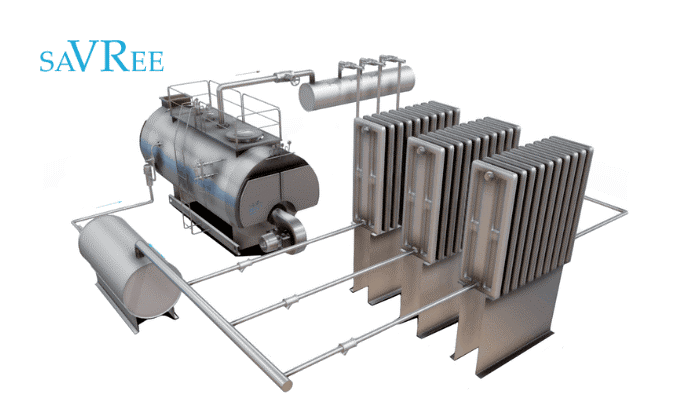
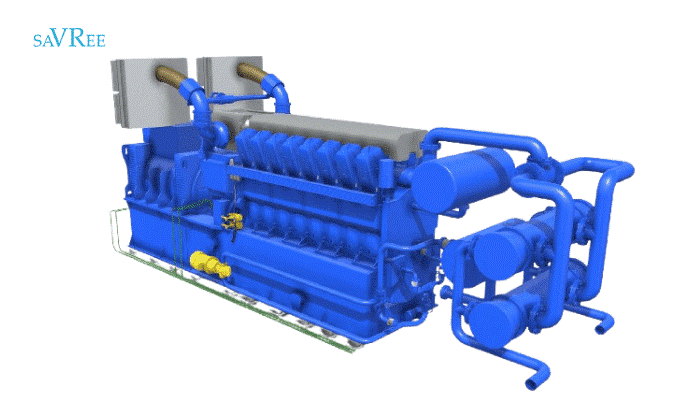
Image Source: saVRee
This is where 3D visuals are changing the narrative. Online platforms that use interactive models, animations, and visualizations make power engineering more exciting, applied, and realistic than it has ever been. Leading this transformation are service providers like saVRee and others, dedicated to this space with elite, dedicated online power engineering courses.
In this article, we will discuss 3D visuals revolutionizing power engineering education, what they offer more than traditional means of learning, and why this is the future of technical learning.
The Challenge of Teaching Power Engineering
Engineering in the power industry spans a breadth of disciplines like electrical machines, power systems, managing the grid, and integrating renewable energy. Learning how these systems intersect is not a trivial task.
For decades, students have had access to:
- Textbooks with equations, diagrams, and lots of theory.
- Lectures explaining concepts verbally, with limited or no visual context.
- Laboratories are ted by cost and fragile equipment.
Other than providing a basic understanding, these pedagogical approaches do not give learners a full appreciation of how systems in the real world operate. It is easy to imagine attempting to understand how a transformer operates by looking at a 2D representation; it is educational, but it does not include the interaction or conditionality to understand fully.
This is precisely why 3D visualization exists.
How 3D Visuals Transform Power Engineering Learning
- Challenging Concepts Are Made Simple
3D animations and models can take complicated systems and break them down into manageable, visual explanations. For example, rather than reading about how magnetic flux flows through a transformer, students can see it in an animated simulation. 3D animated visuals provide tangible insights from abstract theories.
- Learning Interactively Increases Engagement
Listening and reading are examples of passive learning. Research indicates that passive learning results in low retention rates. The nature of 3D interactive visuals allows users to do things like rotate a model, zoom into components of a model, and simulate tasks and processes. This creates a rich, immersive experience instead of just watching a video or listening to a lecture.
- Safe and Scalable Practice
Working with high-voltage equipment in a physical lab can not only be dangerous, but costly, too. Working with a 3D model creates a simulated scenario where users can learn about high-voltage electrical components, troubleshoot issues, and learn safely. On the other hand, 3D models can easily be scaled so that thousands of students can have access to training at the same time; this is impossible within a physical lab setting.
- Connecting Theory to Practice
3D visuals provide the connection between theoretical formulas and practical applications. Engaging with 3D animated models allows learners to connect equations visually and real-world systems, and therefore see why these concepts are important and how they are used in practice.
Traditional Training vs. Online Learning with 3D Visuals
To understand the influence of 3D visuals, it is helpful to contrast the typical approach to learning with a traditional method:
Traditional Learning
- Delivery: Textbooks, lectures, and a few diagrams
- Practical Exposure: Limitations imposed by available lab equipment
- Flexibility: Schedule and delivery determined by location
- Cost: Tuition and infrastructure costs are significant.
- Retention: Passive learning will have low retention
- Curriculum Updates: New technology is slow to appear in the curriculum
Online Learning
- Delivery: Interactive animations, 3D models, and virtual simulations
- Practical Exposure: You have unlimited access at any time
- Flexibility: Learn at your own pace, and from anywhere
- Cost: More affordable and scalable globally
- Retention: Engaged learning, improved retention
- Curriculum Updates: Can update quickly to changes and trends in the industry.
Educators have an important role to play in society, and traditional learning is a legitimate and valuable way to learn- especially for legal and formal degree programs. That said, 3D visuals in online learning experiences have very few limitations regarding location, accessibility, affordability, or up-to-date material.
Why 3D Visuals Are Essential for Power Engineering
Enhanced Visualization of Industrial Systems
Power engineering consists of significant and complex machinery such as turbines, generators, and circuit breakers. With very few exceptions, students will have had minimal interaction with these systems in real life during their studies. But with the utilization of 3D visuals, the students will be able to experience equipment virtually and realize learning that they would struggle to comprehend in the standard classroom environment.
Preparing for Real-World Challenges
Increasingly, employers are seeking graduates who are ready to work. Strengthening their 3D experience in engineering education will allow students to appreciate the theoretical knowledge required and build confidence to apply this in an industrial situation. Being job-ready, not just trainable, makes for a more appealing candidate for employers.
Supporting Continuous Learning
Engineering is a lifelong venture. The industry will evolve as new technologies such as smart grids and renewable integration emerge, allowing practitioners to quickly upgrade their skills using 3D visuals where there had previously been limited access to physical or experiential training facilities.
The Role of saVRee in Power Engineering Education
saVRee is one of the educational platforms that is changing how we teach engineering and contains a library of online power engineering courses and concepts of power engineering, which provide a balance of real-life and theory, and great 3D learning.
saVRee’s key features include:
- Interactive 3D Models: Students can take a deeper exploration of machines such as generators, transformers, or switch gear.
- Industry-Relevant content: Courses are developed around real systems compared to academic theories.
- Scalable solutions: Useful for students and training departments.
- Universal accessibility: Any end-user with an internet connection can access their content without barriers such as cost or location.
By blending theory with immersive visuals, saVRee helps equip students and professionals in Canada and around the world with the resources to begin a career in power engineering and compete in today’s power engineering industry.
The Future of Power Engineering Education
Not only can educationalists not fall behind here as industries embrace technology and digitalization, but students in education and training will need to be digitally competent and apply their knowledge both practically and beyond geographical borders.
It can be anticipated that there will be a model in the future; multi directional learning environments where the classroom and physical lab environments will be coupled with blended, on-demand, and online learning spaces consisting of our 3D visuals. Blended learning will also ensure that learners will be able to understand theoretical concepts in practical contexts.
We can envisage that 3D visuals will be at the center of the future of learning by facilitating a more accessible, interactive, and productive learning journey when establishing, understanding, and applying power engineering.
Final Thoughts
Why are 3D visuals changing the face of power engineering education? They take learning from abstract theory to actual cognitive understanding and invoke engagement from learners in ways that get them to feel like they are there, and it makes state-of-the-art systems available to anyone from anywhere.
After all, when learners enroll in online power engineering courses from providers such as saVRee, they are receiving the best of both worlds: the theory-based traditional training and the full-body experience of 3D-based learning.
For starters, this type of learning enables graduates or any other type of beginner to cope with complex and nuanced information. And for the final-year students and professionals, perhaps a more convenient way to maintain currency in the sector, acknowledge and respond to the nature of change, and upskill. Either way, graduates are not using 3D-based visual learning as a teaching technique; it is now the future of engineering education.